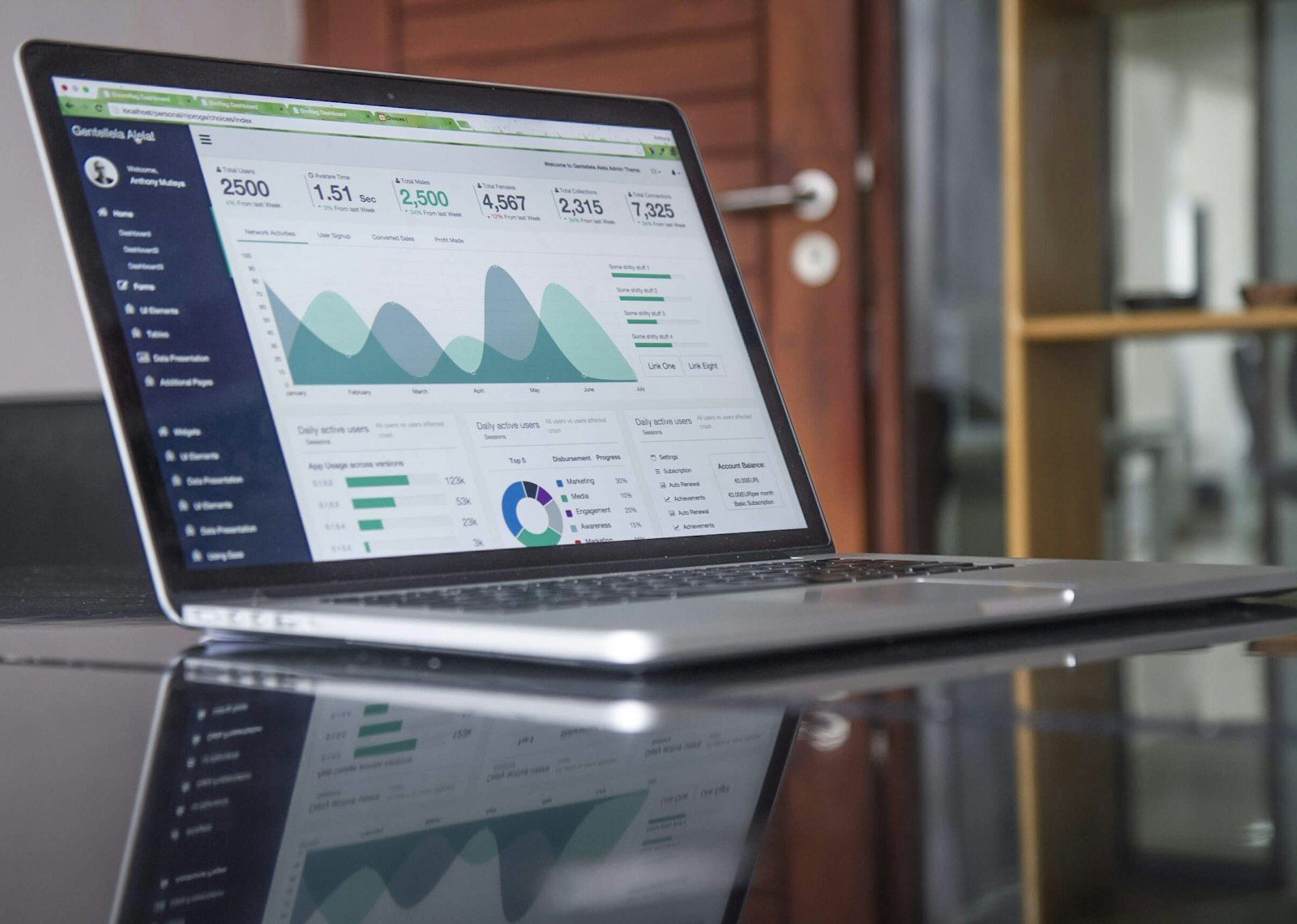
Every founder asks the same question: do I buy it, build it, or drag-and-drop it? Here's the framework we walk clients through in the first call.
Every week someone asks us: should I build this custom, buy an existing SaaS, or just hack it together in Webflow or Bubble? The honest answer is "it depends" — but after a hundred of these conversations we've found the decision almost always comes down to four questions.
The four questions
1. Is your workflow genuinely different from the norm?
If your business process looks like 80% of other businesses — invoicing, CRM, booking appointments, selling a product online — there is almost certainly a SaaS that does it better than you could build, for less money, maintained by a team of hundreds. Use it.
If your workflow is the weird thing that makes your business yours — the pricing logic only you understand, the approval chain your industry demands, the calculations your competitors can't do — a custom build is what captures that advantage. SaaS will force you to mould your business to its shape.
2. How many users, and how fast are you scaling?
No-code tools (Bubble, Webflow, Softr, Glide) are wonderful up to a point. That point is usually around 5,000 active users or when you need anything unusual: a background job, a complex permission model, a third-party integration they don't support, or sub-200ms response times.
Past that, you start paying premium pricing and hitting platform ceilings. Migrating off no-code later is often a full rewrite — which means the "cheap" start was actually expensive.
3. Who owns the data, and does it matter?
If your business dies the day a vendor shuts down, you've built on rented land. SaaS is fine for tools that support your business (email, accounting, calendar). It's dangerous for things that are your business (the product your customers pay for, the data that makes you defensible).
Custom builds give you your own database, your own code, your own leverage. That matters more for product companies than for service companies.
4. What's the real budget — including year two?
Founders compare a R150 000 custom build to a R800/month SaaS and conclude SaaS is cheaper. It usually is — at first. The comparison that actually matters is three-year total cost, including per-seat escalation, integration costs, and the cost of being locked in when you want to change direction.
The rough decision matrix
Here's how we usually frame it:
- Standard workflow + small team + tight budget → SaaS. Always.
- Standard workflow + you want it branded → SaaS with custom frontend.
- Unusual workflow + under 1 000 users + need to ship fast → No-code, with an eye on migration.
- Unusual workflow + scale + data sensitivity → Custom build. No shortcuts.
- Your product itself → Custom. It is the business.
A pattern we see often
The smartest founders don't pick one. They SaaS the boring parts (accounting, email, CRM), no-code the experiments (landing pages, internal tools), and invest custom engineering only where the leverage is: the core product, the unfair workflow, the one thing that makes customers choose them over a competitor.
Your tech stack should reflect your strategy: buy what's commodity, rent what's temporary, build what's yours.
When we tell clients to walk away
We turn down projects every month. Usually because a founder wants us to build a custom version of something that already exists — a project management tool, a booking system, a CRM — and there's no real differentiator. That's a R500 000 mistake waiting to happen. A R800/month subscription would do the same job better.
The exception is when there's a real reason: a regulatory requirement, a workflow no tool supports, or a strategic need to own the data. Then we build.
Ask yourself first
Before you take a meeting with any agency — ours included — write down the answer to these two questions: "What does this have to do that no off-the-shelf tool can?" and "What breaks if I wait six months to build this?" If both answers are thin, you don't need a custom build yet. You need a free trial.